
School Workshops
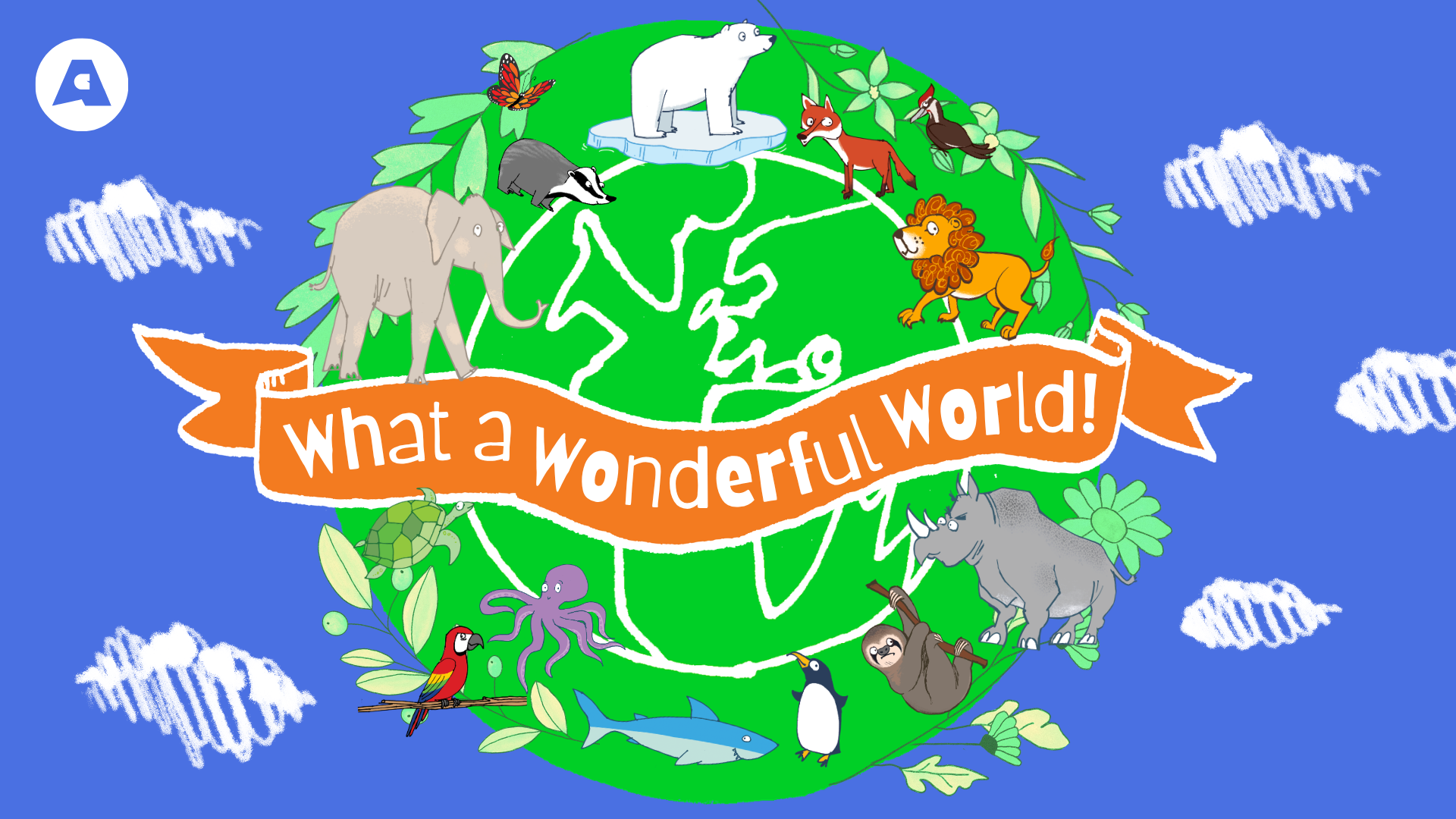
What a Wonderful World
High-energy and fact-packed – and accommodating up to 420 pupils in a single day!
It’s sometimes easy to forget just how beautiful our home is – so reflecting on the amazing variety of life that Planet Earth supports is a wonderful way of reminding us all of the importance of looking after it. And What a Wonderful World gives children the opportunity to discover how resilient that life is, clinging on in what often look like the most inhospitable of habitats!

Introduction
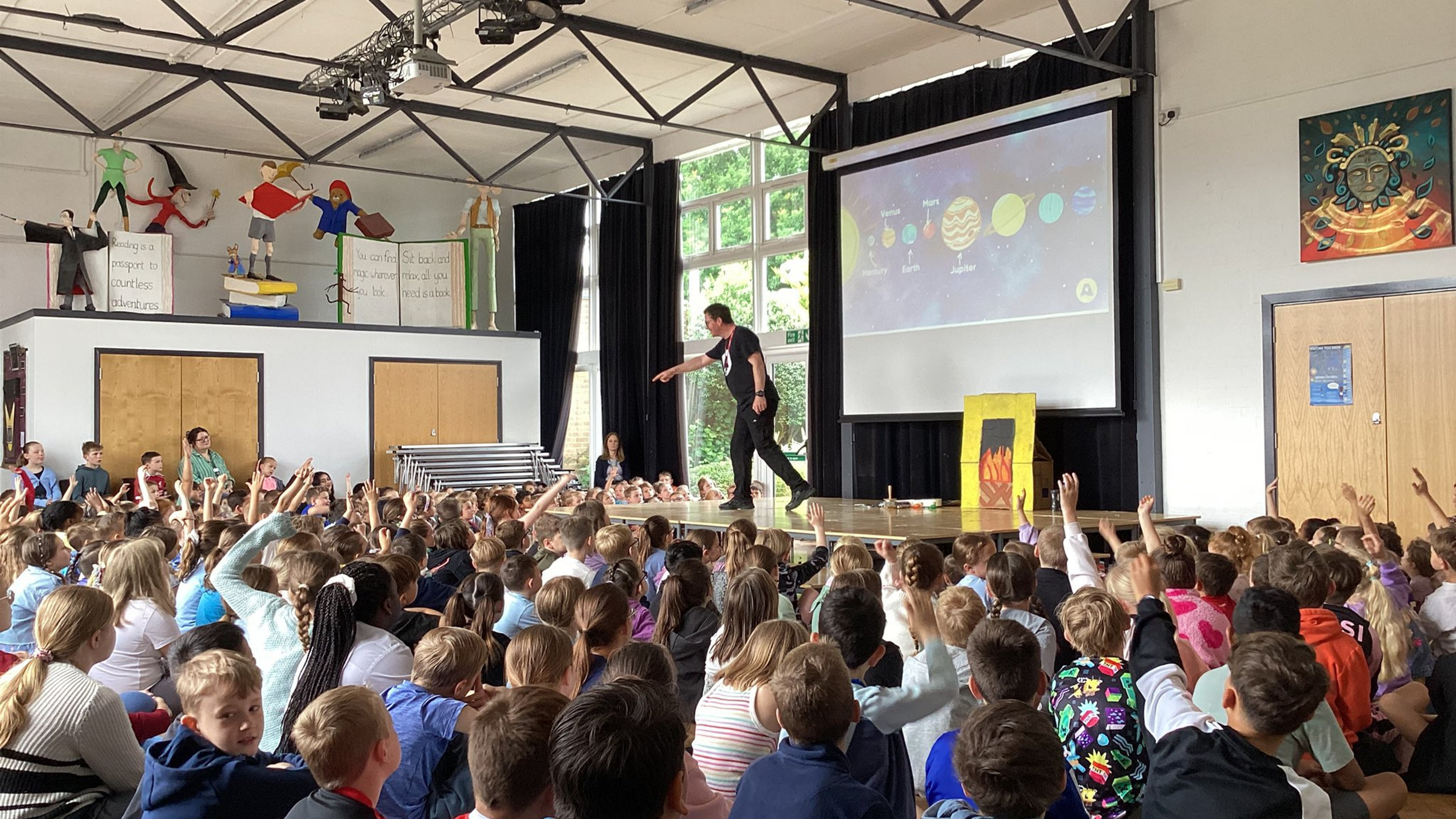
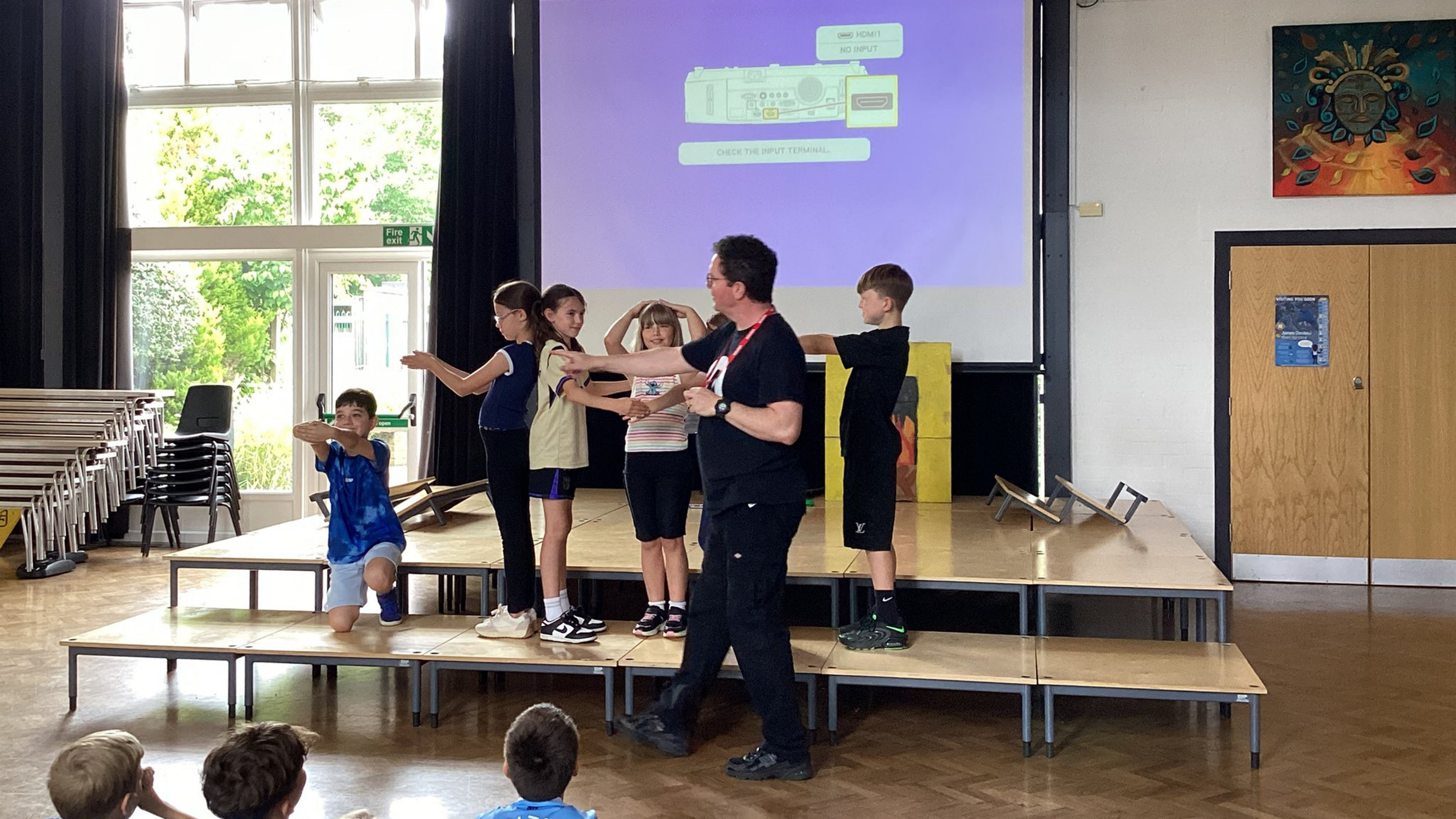
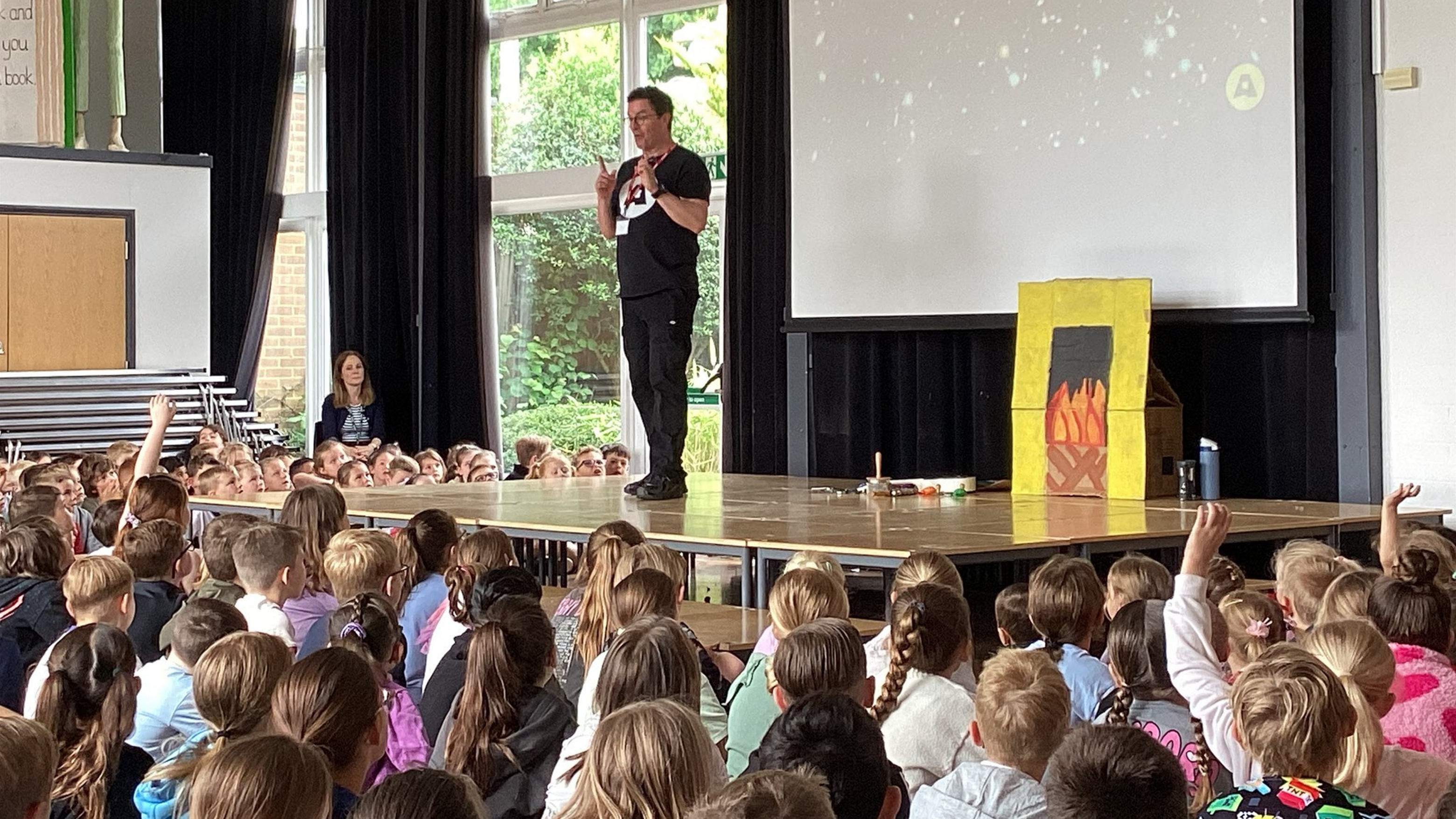
Rather than relying on “whizz bang” experiments or outlandish props, our creative science workshops harness a range of immersive techniques (including drama and games) to cement prior learning, clarify difficult concepts, introduce new content and extend thinking. A highly engaging, illuminatory and thought provoking whole-school programme, What a Wonderful World can accommodate the whole of up to a two-form entry school in a single day, compromising …
An interactive assembly, The Search for Life, demonstrating just how unique and fragile our planet is – and looking at some of the things we can all do to protect it from the ravages of climate change.
Workshops (one per year group), in which children play a drama-based game to explore life in identified habitats across the globe – and some of the threats posed to them by human activity.
EYFS – Our Local Environment: What creatures lurk around us, in the school grounds, in our neighbourhoods and in our parks? And how can we help keep them safe?
Year 1 – Freshwater Habitats: From plants specially adapted to grow in water to animals that make their homes on our riverbanks to those that live in the rivers and streams themselves, freshwater habitats make up ecosystems just in themselves! Children will learn about all these aspects – and think about ways of protecting these veins and arteries of Planet Earth.
Year 2 – The Savannahs: The savannahs provide the perfect places to examine food chains, taking in producers like acacia trees, such herbivores as zebra, the scavengers of the vulture world – and lions, the apex predators! So why are we damaging these precious habitats – and what can we do about it?
| Year Groups | EYFS – Y6 |
|---|---|
| Curriculum | Science |
| Pupil Numbers | Whole school |
| Space | School Hall |
Year 3 – The Oceans: The oceans cover almost three quarters of the surface of Planet Earth – and we know less about their mighty depths than we do about the surface of the moon! They’re home to fish, molluscs, cephalopods, crustaceans, amphibians, mammals (and more) – and even birds soar over them. Why are the oceans such a rich source of life – and what, exactly, are we humans doing to them?
Year 4 – Mountainous Regions: With their plummeting temperatures, lack of soil and depleted oxygen, you could be forgiven for thinking life wouldn’t stand much chance in the world’s mountainous regions. But you’d be wrong! There are species of trees, mosses, lichens, flowering plants, birds and mammals all specially adapted to life in these harsh environments. Like everywhere else, they’re threatened by climate change – but, almost uniquely, those threats are also directly posed to humanity itself!
Year 5 – The Poles: Human beings have long been fascinated by the poles, those vast expanses of ice and snow where we could never survive unprotected. But lots of animals do! Just how are polar bears, whales and penguins adapted to not just survive but thrive in these extremes of cold – and what role does the science of states of matter play in all this? And, crucially, what will happen if the ice melts?
Year 6 – The Rain Forests: The rain forests are often described as the lungs of the Earth – so why do human beings seem so intent on destroying them? They are home to an astonishing variety of animals, plants and fungi, each one playing its own vital part in maintaining the delicate balance between life and death
Workshop Testimonials
“All of the children and staff have thoroughly loved working with Zoe today! What an amazing energy she brings – thank you so much for a great day of science.”

“The children loved the workshops and were fully engaged with the activities and the learning. They learnt some surprising new facts about our world and the creatures in it! They loved the way this was presented and enjoyed the inclusive and interactive nature of the workshops. Why haven’t I thought of presenting new information in this way before?!”

Workshop FAQs
How many pupils can take part?
Up to 60 pupils per workshop – that’s the whole of a two-form entry school in just one day!
What is the format of the day?
We will work with you to plan a timetable for the workshops, to suit the number of classes you would like to include – and around the specific timings of your school day. In a two-form entry primary school (with all year groups apart from Reception taking part in groups of up-to 60), the timetable might look like this:
09.00 – 09.20: (optional) Whole-school assembly, where your visitor will introduce the day…
09.20 – 10.00: Year 1 stay in the hall for their workshop …
10.00 – 10.40: Year 2 come to the hall for their workshop …
10.40 – 11.20: Year 3 come to the hall for their workshop …
11.20 – 11.50: One Reception class have a visit, in their own setting …
LUNCH
1.00 – 1.30: The other Reception class have a visit, in their own setting …
1.30 – 2.10: Year 4 come to the hall for their workshop …
2.10 – 2.50: Year 5 come to the hall for their workshop …
2.50 – 3.30: Year 6 come to the hall for their workshop.
Are there any technical requirements?
Each working space needs to be equipped with laptop, screen or projector, so pupils can view the supporting PowerPoint throughout.
Where will the workshops take place?
These workshops require the use of your school hall.
Are there any other whole school science days?
Yes, lots! you can also enjoy a whole school experience with Curious About Science, The Science of Change, Time for Science, The Connection, The Regenation Generation and Science Skills!
Or, build your own whole school, Big Science Day

Related Workshops

The Regeneration Generation – Saving Planet Earth!
The children and young people of today form the Regeneration Generation. Because, by learning from the errors of the past, they’ll regenerate Planet Earth by combatting climate change – and put a smile back on the face of the planet itself!

Big Science Day
A Big Science Day can accommodate up-to the whole of a two-form entry school in one day.

Big Science: Animals Including Humans
Including an opening assembly and workshops for all year groups, this Big Science Day explores the diversity, wonders and workings of the animal kingdom